We have compiled a list of manufacturers, distributors, product information, reference prices, and rankings for Liquid Chromatograph.
ipros is IPROS GMS ・ IPROS One of the largest technical database sites in Japan that collects information on.

Liquid Chromatograph(装置) - List of Manufacturers, Suppliers, Companies and Products | IPROS GMS

Liquid Chromatograph Product List

1~14 item / All 14 items

Displayed results

Automate and remote the analysis workflow! New product Agilent HPLC.

Accelerating Automation and DX: The Arrival of Agilent Infinity III LC with Intelligence Features

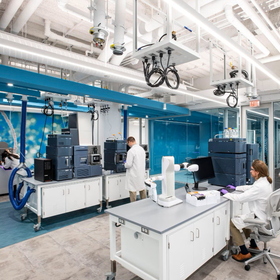
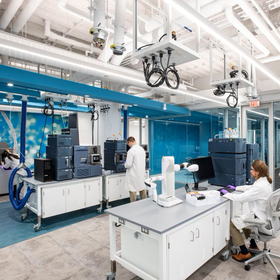
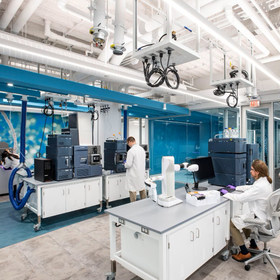
The new Agilent Infinity III LC is a liquid chromatograph that automates and remote-controls analytical workflows, making your lab smarter. It streamlines routine and ancillary tasks, allowing you to focus on R&D and creative work, while reducing human error and stress. **Features** - **Automation and Remote Control** Streamlines daily tasks from mobile phase handling to sample management. You can monitor the status of the device from your office or home. - **Maximizing Uptime** Uses troubleshooting and maintenance guides to maximize device uptime. Even if the LC personnel change due to organizational restructuring or employee turnover, the system can be fully operational immediately. - **Investment Protection** Existing Infinity II LC systems can be easily upgraded with the latest Agilent Infinity III LC technology. *Please download the leaflet with a comparison table to conventional HPLC here (PDF).*

  • Analytical Equipment and Devices
  • Liquid Chromatograph

Added to bookmarks

Bookmarks list

Bookmark has been removed

Bookmarks list

You can't add any more bookmarks

By registering as a member, you can increase the number of bookmarks you can save and organize them with labels.

Free membership registration

Liquid Chromatography Comprehensive Catalog 2022-2023 Edition

High reliability! Liquid chromatograph that adapts to changes in application needs.

Since Agilent launched the HP1010 LC (liquid chromatography) system in 1973, it has consistently incorporated customer feedback and focused on improving system performance. During this time, there was a period when we had development and manufacturing bases in Germany and Japan (Yokogawa Electric, Yokogawa Analytical Systems), but now all LC systems are "Made in Germany." By integrating new technologies, we respond to various needs such as pharmaceutical development, food safety assurance, chemical and material analysis, and compliance with global regulations, serving users around the world. Currently, Agilent has formed a teamwork of LC instruments, columns, consumables, mass spectrometers, software, and service support under the InfinityLab series, continuously evolving to maximize daily analysis, equipment, and lab efficiency.

  • Analytical Equipment and Devices
  • Separation device
  • Liquid Chromatograph

Added to bookmarks

Bookmarks list

Bookmark has been removed

Bookmarks list

You can't add any more bookmarks

By registering as a member, you can increase the number of bookmarks you can save and organize them with labels.

Free membership registration

Shinfuji Chemical Co., Ltd. Business Introduction

Leave it to us for anything related to pesticides!

Shinfuji Chemical Co., Ltd. is a company based in Yamaguchi Prefecture that focuses on contract manufacturing and processing of agricultural chemicals. Since its establishment in 1959, we have contributed to the labor-saving of Japanese agriculture from the standpoint of pesticide formulations. Our formulation facilities are well-equipped to handle small-batch production of a wide variety of products, ensuring the creation of high-quality products. 【Business Activities】 ■ Contract manufacturing and processing of agricultural chemicals *For more details, please refer to our catalog or feel free to contact us.

  • Other contract services
  • Other contract manufacturing
  • Liquid Chromatograph

Added to bookmarks

Bookmarks list

Bookmark has been removed

Bookmarks list

You can't add any more bookmarks

By registering as a member, you can increase the number of bookmarks you can save and organize them with labels.

Free membership registration

What are peak identification and quantification methods in HPLC? Free explanatory materials are currently available.

What are the differences and characteristics of the absolute calibration method and the internal standard method? A thorough and easy-to-understand explanation of each difference! Free basic knowledge materials are currently available.

Peak identification in HPLC is performed based on the retention time of peaks from standard samples. When information such as the UV-Vis spectrum from a DAD is simultaneously obtained, identification can also be done by considering the spectral matching. Quantification of the analyte is carried out by preparing a concentration series of standard sample solutions, determining the peak area or peak height from the chromatogram, and creating a calibration curve. This document provides an easy-to-understand explanation of peak identification and quantification in HPLC using diagrams, and also introduces absolute calibration curves and internal standard methods for quantification. We encourage you to read it. [Contents (partial)] ■ Introduction ■ HPLC Equipment ■ Separation in HPLC ■ Detection ■ Peak Identification and Quantification in HPLC *For more details, please download the PDF or feel free to contact us.

  • Testing Equipment and Devices
  • Liquid Chromatograph

Added to bookmarks

Bookmarks list

Bookmark has been removed

Bookmarks list

You can't add any more bookmarks

By registering as a member, you can increase the number of bookmarks you can save and organize them with labels.

Free membership registration

Liquid Chromatograph "Vanquish Duo UHPLC"

A new immediate asset that challenges productivity improvement.

The Vanquish Duo HPLC system achieves increased productivity and uptime without compromising the high performance, robustness, and ease of use that the Vanquish platform offers. Furthermore, it enables a deeper understanding of samples and allows for a quicker return on investment. 【Features】 ■ Three configurations possible by combining the Vanquish platform: ・Tandem LC: A system for effective utilization of detectors ・Dual LC: Two completely independent LCs realized in a single device ・Reverse gradient system: A system for quantitative analysis using charged particle detectors ■ The dual autosampler's injection unit is completely independent to avoid cross-contamination ■ Regulatory-compliant operating environment with Chromeleon *For more details, please refer to the PDF document or feel free to contact us.

Added to bookmarks

Bookmarks list

Bookmark has been removed

Bookmarks list

You can't add any more bookmarks

By registering as a member, you can increase the number of bookmarks you can save and organize them with labels.

Free membership registration

Liquid Chromatograph 'Vanquish Flex UHPLC'

Improved performance and reproducibility! Experience the UHPLC technology designed for flexibility.

The "Vanquish Flex UHPLC System" is a UHPLC device that improves performance and reproducibility without sacrificing quality, robustness, or ease of use. It is suitable for assays that require flexibility in solvent selection and can accommodate a wide range of applications. It provides excellent performance from method development to routine analysis. Additionally, the 2-component and 4-component mixing pump options deliver outstanding performance in LC and LC-MS workflows. 【Features】 ■ Choose the pump type suitable for your application ■ Obtain reliable results with precise handling ■ Optimize chromatography with temperature control ■ Gain an overall view using multiple detection options ■ Achieve excellent LC-MS performance using dedicated solutions *For more details, please refer to the PDF document or feel free to contact us.

Added to bookmarks

Bookmarks list

Bookmark has been removed

Bookmarks list

You can't add any more bookmarks

By registering as a member, you can increase the number of bookmarks you can save and organize them with labels.

Free membership registration

Transfer methods between different LCs regardless of manufacturer or model!

Seamlessly transfer methods between different liquid chromatographs (LC), regardless of manufacturer or model!

"Are you analyzing with a system different from the HPLC or UHPLC systems where the method development was conducted?" "Are you concerned that the separation ability or retention time may change?" "Are you thinking that you do not want to change the original method parameters or equipment?" With the '1290 Infinity II Method Transfer System', you can seamlessly transfer methods between different LC systems, regardless of the manufacturer or model. [Features] ■ Accelerated method transfer between instruments ■ Improved productivity in method development ■ Ensures methods are executed as intended ■ Minimizes equipment management costs *For more details, please refer to the related link page or feel free to contact us.

  • Analytical Equipment and Devices
  • Separation device
  • Liquid Chromatograph

Added to bookmarks

Bookmarks list

Bookmark has been removed

Bookmarks list

You can't add any more bookmarks

By registering as a member, you can increase the number of bookmarks you can save and organize them with labels.

Free membership registration

[HPLC Case Study] Analysis of Dairy Beverages by Automatic Derivatization of Amino Acids

High-precision and convenient automatic quantitative analysis of amino acids using the custom injection program function of an autosampler.

Many amino acids do not absorb ultraviolet (UV) light, making it difficult to improve sensitivity and selectivity with conventional analytical methods, which are also complicated and lack stability. This technical document introduces a case where a custom injection program feature in the auto-sampler of the Thermo Scientific Vanquish Core HPLC system was utilized to derivatize 20 types of amino acids simultaneously using a pre-column derivatization method for simultaneous analysis. This system enables highly accurate quantitative analysis as it is not affected by the degradation after the derivatization reaction. Validation using commercially available beverages showed that selective quantification was possible even in complex sample matrices such as food. 【Features】 ■ Simultaneous derivatization and analysis of 20 types of amino acids ■ High-precision quantitative analysis achieved through pre-column derivatization ■ Provides good linearity and high reproducibility ■ Selective detection even in complex sample matrices ■ Automation by the auto-sampler avoids human error and improves work efficiency

Added to bookmarks

Bookmarks list

Bookmark has been removed

Bookmarks list

You can't add any more bookmarks

By registering as a member, you can increase the number of bookmarks you can save and organize them with labels.

Free membership registration

[Case Study] Analysis of Additives in Nickel Sulfate Plating Solution by HPLC

HPLC method achieving high-sensitivity quantitative analysis without complex preprocessing: Introducing quantitative know-how for quality control.

In the quality control of plating solutions, the quantification of additives is an important factor. In particular, the quantification of sulfur-containing compounds that contribute to film quality adjustment and prevention of liquid decomposition is essential. This document provides accurate and highly reproducible analytical results using a method that does not require complex pretreatment. For the HPLC measurement conditions, an ion-pair reagent was added to the mobile phase, and an injection method was adopted to reduce the influence of sample impurities. As a result, sharp peaks can be obtained without being affected by metals and inorganic ions. Additionally, by comparing the chromatograms of the standard solution and the plating solution sample, it can be confirmed that the concentration of additives is maintained consistently. Furthermore, as an evaluation of reproducibility, the same sample was measured five times, demonstrating high reproducibility. 【Features】 ■ High-sensitivity quantitative analysis without complex pretreatment ■ High reproducibility using ion-pair reagents ■ Injection method that reduces the influence of metals and inorganic ions ■ Accurate quantification through comparison of standard solutions and actual samples ■ Highly reproducible analytical results

Added to bookmarks

Bookmarks list

Bookmark has been removed

Bookmarks list

You can't add any more bookmarks

By registering as a member, you can increase the number of bookmarks you can save and organize them with labels.

Free membership registration

[Free Material] The First Step to Turning Lab Data into Competitive Advantage

Are you making full use of lab data? What is the data strategy required in the AI era?

Although analysis data is accumulated, are you facing challenges such as not being able to quickly find the necessary data, not being able to compare it with past data, or not being able to reuse it across departments? To leverage AI and MI (Material Informatics), it is crucial to accumulate data in a "usable state." This document explains the concept of utilizing lab data that goes beyond mere digitization and outlines the first steps to connect it to competitiveness. Based on interviews with specialists who support analysis data management and utilization at Waters Japan, it is organized from a practical perspective. [Key Highlights] - Reasons why lab data utilization affects competitiveness - Differences between digitization and DX (Digital Transformation) - Conditions for data that should be prepared before utilizing AI and MI You can view it for free by downloading from the "Download Catalog" link below. By clicking on [Contact Us], you are deemed to have agreed that Waters will use and process the information provided on this site in accordance with the Waters Terms of Use and Privacy Notice. Terms of Use and Privacy Notice: www.waters.com/legalandprivacy

  • Analytical Equipment and Devices
  • Document and Data Management
  • Integrated operation management
  • Liquid Chromatograph

Added to bookmarks

Bookmarks list

Bookmark has been removed

Bookmarks list

You can't add any more bookmarks

By registering as a member, you can increase the number of bookmarks you can save and organize them with labels.

Free membership registration

[Case Study] Purification of Vitamin K Isomers by Temperature-Controlled Fractionation

Demonstration of high recovery rate and isomerization suppression using normal phase HPLC with a fraction collector.

This application note presents a case study of the high-precision separation and collection of cis/trans isomers of vitamin K1 using the Thermo Scientific Vanquish Core HPLC system and Vanquish Fraction Collector. The normal phase kit extends compatibility with organic solvents such as hexane, confirming excellent reproducibility that meets EP standards (RSD < 1%). Recovery rates of 99.5% to 101.4% were achieved for both peak-based and time-based collections. Furthermore, collection and storage were conducted under temperature control, comparing isomerization behavior at 8 °C and 35 °C, demonstrating that temperature management is crucial for suppressing structural changes. For more details on reliable isomer purification using the normal phase compatible collection system, please refer to the materials. 【Features】 ■ Extended solvent compatibility with normal phase HPLC compatible kit ■ High reproducibility with retention time and peak area RSD < 1% ■ High-precision collection with recovery rates of 99.5% to 101.4% ■ Significant suppression of isomerization with low-temperature storage at 8 °C ■ Quantitative evaluation of isomerization reactions and verification of temperature dependence

Added to bookmarks

Bookmarks list

Bookmark has been removed

Bookmarks list

You can't add any more bookmarks

By registering as a member, you can increase the number of bookmarks you can save and organize them with labels.

Free membership registration

[HPLC Case Study] Analysis of Organic Acids in Beverages Using Post-Column Analysis Method

Accurate quantification of organic acids in beverages! Introduction to the performance and convenient features of a post-column HPLC system suitable for routine analysis.

This technical document introduces a post-column analysis system for accurately quantifying organic acids in various beverages. The analysis column uses ion exclusion mode, and by adding BTB solution post-column, it separates and detects ten types of organic acids with good reproducibility. The e-workflow feature, which supports operations in routine analysis, is a significant advantage as it fully automates the process from device startup to measurement and report generation. The HPLC system features a compact design that incorporates a dual pump with two pumps in one module for analysis and post-column solution delivery. Additionally, even in the event of an error, the automatic switching of valves prevents the post-column reaction solution from backflowing into the analysis column, allowing for safe adoption in routine analysis. 【Features】 ■ Accurate quantification of ten types of organic acids with good reproducibility of less than 1% ■ Separation of organic acids using ion exclusion mode columns, allowing measurement without matrix effects ■ Detection limits for organic acids in this method range from a few to 7 μg/mL ■ Automation of the process from device startup to report generation with the e-workflow feature ■ Ensured safety with automatic valve switching in case of errors

Added to bookmarks

Bookmarks list

Bookmark has been removed

Bookmarks list

You can't add any more bookmarks

By registering as a member, you can increase the number of bookmarks you can save and organize them with labels.

Free membership registration

[Free Material] Laboratory Data Infrastructure to Prepare Before Utilizing AI and MI

Before utilizing AI and MI, make the analysis data searchable, comparable, and reusable.

<Series Volume 1> Data Strategy to Succeed in Chemical Analysis in the AI Era Despite the accumulation of analytical data, are you facing challenges such as not being able to quickly find the necessary data, not being able to compare it with past results, or not being able to reuse it across departments? To effectively utilize AI and MI (Materials Informatics), it is crucial to prepare the analytical data for search, comparison, and reuse. This document explains how to establish the data environment necessary for AI and MI utilization based on interviews with informatics personnel at Waters Japan. [Key Highlights] • Expected changes through the use of AI, MI, and automation technologies • Differences between AI and DX, and the common data environment required for both • Concepts for preparing analytical data for search, comparison, and reuse By clicking on [Contact Us], you agree that Waters will use and process the information provided on this site in accordance with Waters' Terms of Use and Privacy Notice. Terms of Use and Privacy Notice: www.waters.com/legalandprivacy

  • Analytical Equipment and Devices
  • Document and Data Management
  • Integrated operation management
  • Liquid Chromatograph

Added to bookmarks

Bookmarks list

Bookmark has been removed

Bookmarks list

You can't add any more bookmarks

By registering as a member, you can increase the number of bookmarks you can save and organize them with labels.

Free membership registration

[Free Material] The First Step of Lab DX: Preparing the Data Infrastructure in 3 Steps

Starting with a data inventory: How to promote Lab DX for AI and MI utilization.

<Series Volume 3> Data Strategies to Succeed in Chemical Analysis in the AI Era Many companies want to advance their DX and AI utilization but are unsure where to start. One reason for this is that analytical data is dispersed across PCs connected to instruments and departmental systems, making it difficult to search, compare, and reuse. This document explains a step-by-step approach to gradually establishing a data infrastructure based on interviews with informatics personnel at Waters Japan. [Key Highlights] • Three steps: inventorying data, aggregation and collaboration, structuring and standardizing • The role of SDMS in supporting the collection, search, and reuse of analytical data • A method to start small with a focused scope and gradually expand • How to organize your company's challenges and proceed with consideration while incorporating external insights By clicking [Contact Us], you are deemed to have agreed that Waters will use and process the information provided on this site in accordance with Waters' Terms of Use and Privacy Notice. Terms of Use and Privacy Notice: www.waters.com/legalandprivacy

  • Analytical Equipment and Devices
  • Document and Data Management
  • Integrated operation management
  • Liquid Chromatograph

Added to bookmarks

Bookmarks list

Bookmark has been removed

Bookmarks list

You can't add any more bookmarks

By registering as a member, you can increase the number of bookmarks you can save and organize them with labels.

Free membership registration